attributed to Althamar of Stoink, Sage of Dead Tongues
“They were the first to hear the shadow speak, and the last to remember that it whispers only of hunger.”
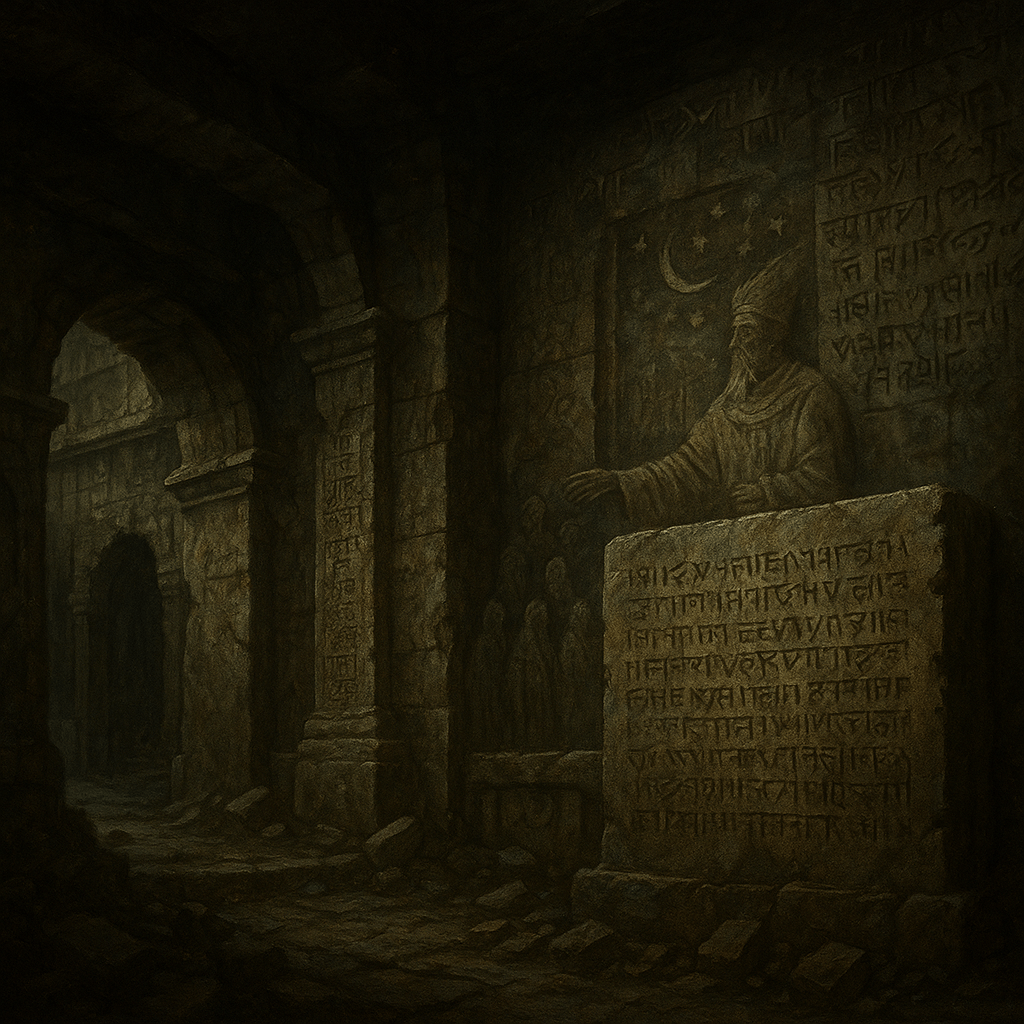
Long before the rise of Aerdy, before the migrations of Oeridian tribes or the wars of Vecna and Kas, the Ur-Flan ruled a fractured but powerful network of city-states. They were not merely necromancers, but philosophers, astronomers, and priests who saw death as a system to be understood, harnessed, and taxed. From the windswept barrow-plains to the cavern rifts where the earth’s shadow pools, the Ur-Flan built monuments to eternity and codified the first laws of necromancy.
Among their chroniclers, none is so frequently cited — and feared — as Taranep of the High Scriptorium, a scholar-mage of the Dreaming City of Shar-Ankuraat. His works, collectively called the Emakhet Flan or Horizon of the Flan, are scattered fragments written during the reign of the early Shademasters (c. −3163 CY). They are part civic record, part ritual manual, part philosophical meditation, and they reveal a culture poised between greatness and annihilation.
Taranep’s surviving fragments speak of the Sekkirmaat — criminals bound into servitude after death — and of the Netherwell, where body and soul were finally surrendered to the void. They describe the eight-year Cycle of the Eclipse, a calendar of power and atonement that culminated in the Great Unbinding, a ritual “jubilee” that fed the shadow with thousands of lives. Scholars debate whether Taranep intended these writings as praise for the Shademasters’ perfect order or as a veiled warning of the doom to come.
To read the Emakhet Flan is to step into a world where law, death, and shadow were inseparable — a world whose echoes still stir when torches gutter and shadows move against the wall. Age of Zan-Shutet or “openers of the shadow lands” (–5000 to –3500 CY)
“The Opening of the Shadow Land” – ( -5500 to -3500 CY )
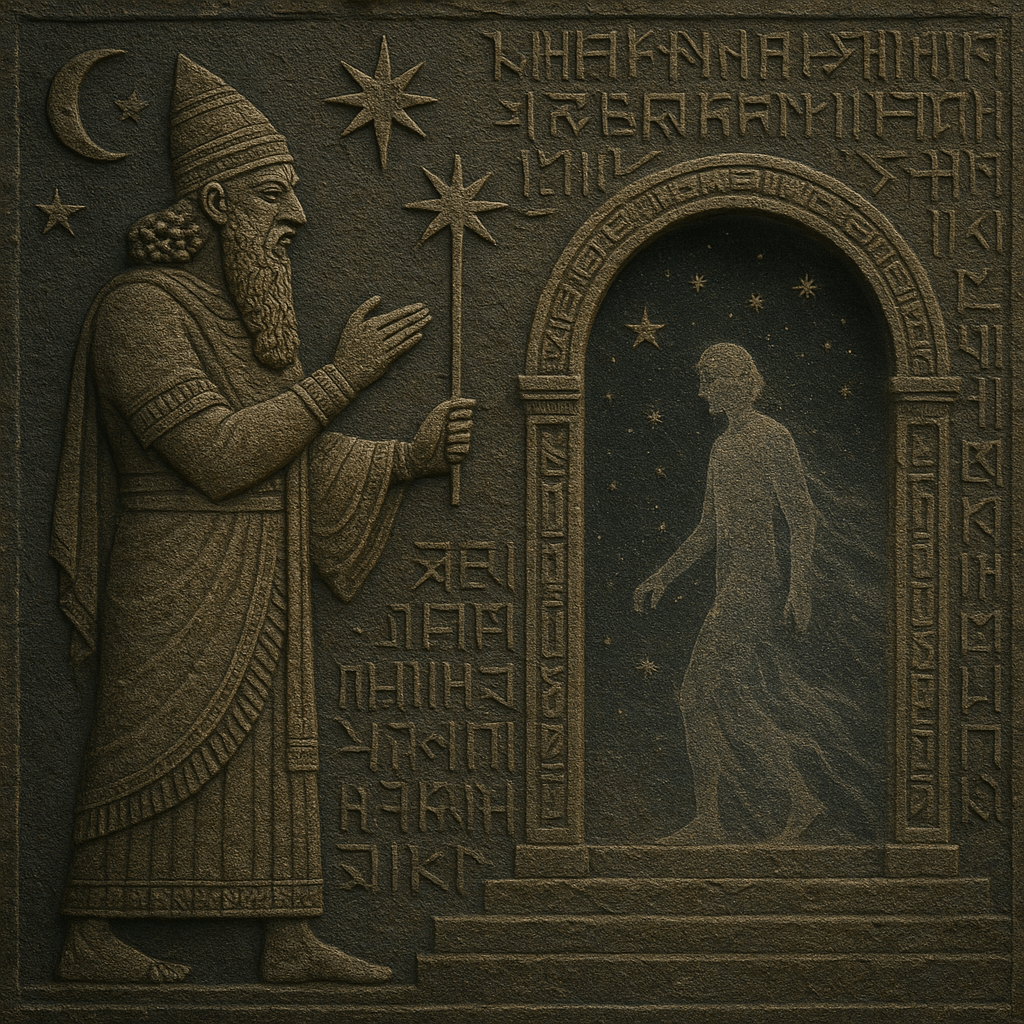
The earliest Ur-Flan necromancers emerge as priest-kings, dabbling in shadow-rituals and, later, become aware of the Negative Plane. Known as the “Zan-Shutet” or, openers of the shadow lands”, they were legendary proto-sorcerers who discovered in their pursuit of the worship of nature and Beory that shadows are the boundary between worlds and there was more to it than a step in an endless cycle.
Following various ley lines, they found similar areas strong in the shadow and this led to a place of convergence, what was later to become fabled as the Shadow Caverns. Here, they built and carved part-tomb and part-laboratory their places to worship and reach out.
During this age, a rift grew between the proto-worship of nature which would later shift to Beory and a growing, secretive sect of the Zan-Shutet. Over the decades, magic was learned to develop shadow-gates (precursors to learning to transit the Prime Material via Shadow plane). The Zan-Shutet dabbled in necromancy, in its proto form: more divination and research, not lichdom, and developed animistic shadow-bindings.
A few ruins of this epoch have been rumored to have been found at great risk and described as cyclopean, foreign to later Flan ruins and cultural works, and heavily warded — surviving intact while comparable areas have crumbled.
The Age of Shademasters (–3500 to –2500 CY)
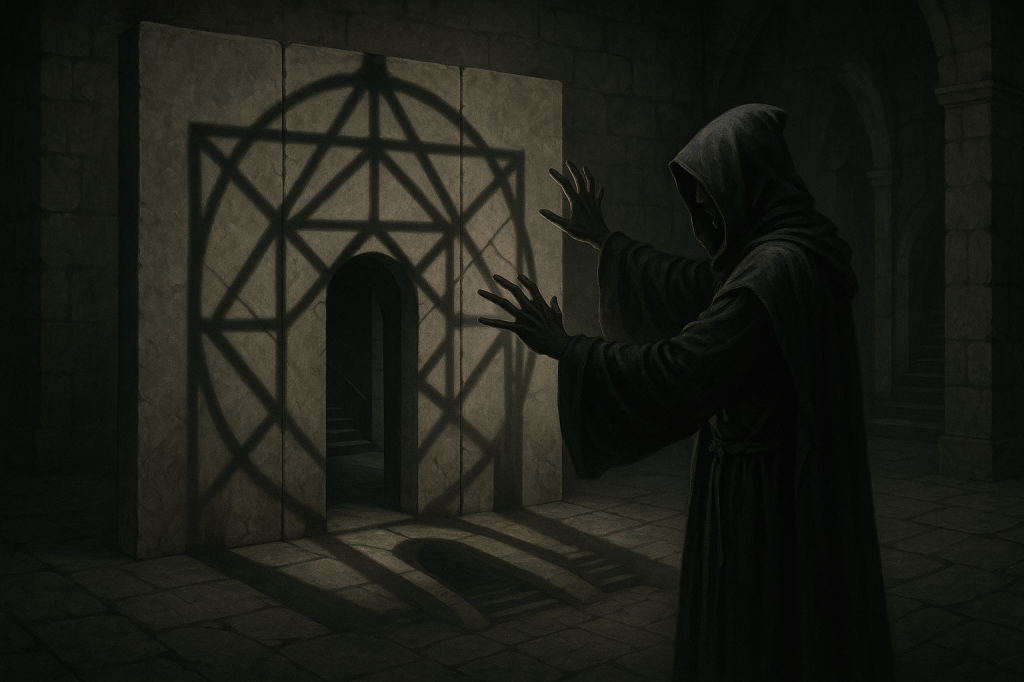
Towards the middle of the 4th millenia BCY, the cult of Zan-Shutet had grown into a segment of society and sat as an expanded part of the cycle or nature worship. The Zan-Shutet legacy grew to be eclipsed by a group bearing the title of Shademaster, necromantic dynasts who systemized and turned shadow-craft into a discipline and a path for those seeking power.
They are remembered as lords of small ward-cities, each necropolis-state ruled by a cabal of Shademasters.
Further development of the Shadow Caverns expand into their greatest extent during this era: the settlement of a new city, wards, ritual chambers, and necrotic reliquaries.
Fragments describe the use of Shadow-wards (layered necropolis defenses tied to geometry and ritual) and the use of experiments with undead servitors and later becoming integrated as part of the justice system to further their infrastructure and research.
The Age of Tyrants (–2500 to –1850 CY)
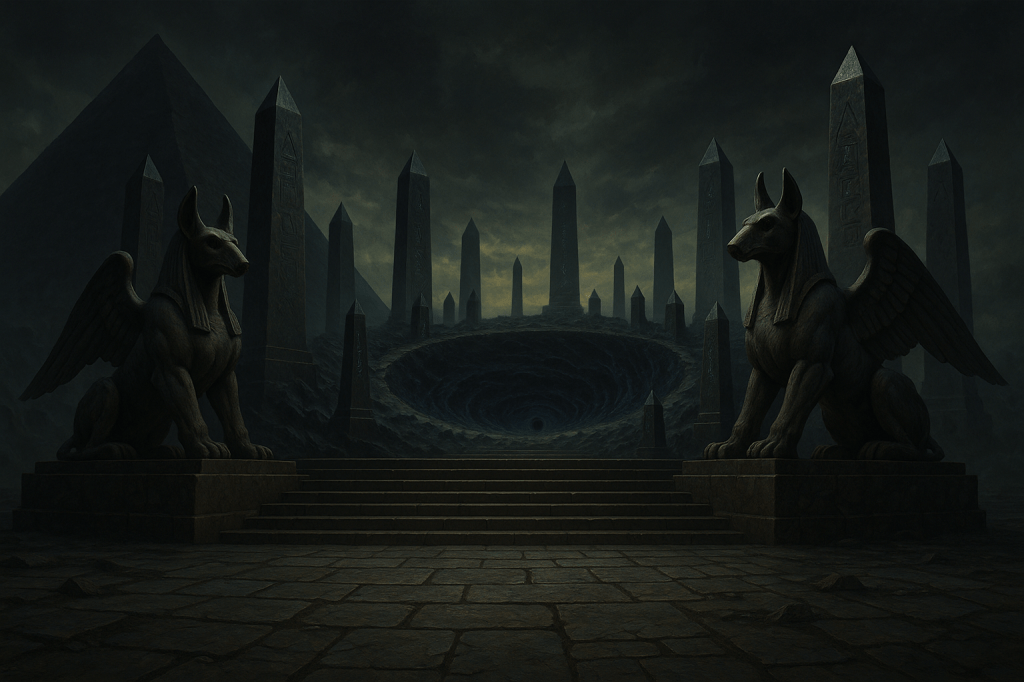
The Shademaster councils gave way to more powerful adherents known in the early era as “The Necromancer-Kings”. They quickly consolidated power and cities through intrigue and open conflict. The earliest infamous, at least those known in scholarly circles, Ur-Flan appear in the central/northern Flanaess (Tenh, Rovers of the Barrens, Aerdy Plains, the Sheldomar Valley).
By this period. The Ur-Flan and their subjects are culturally distinct from other Flan: obsessed with death-cults, necromancy, and elemental/void worship. Some evidence suggests they were the first to dabble with shadow and negative-plane energies directly, or some conjecture they were influenced by a chaotic elemental force such as the Elder Elemental God or its aspects (e.g.: Tharizdun).
This period, while records are scant, is the best-known Ur-Flan epoch, remembered through Vecna, Keraptis, Acererak, and others. During this latter period of consolidation, the title ‘Tyrant’ was celebrated as one of obtaining not only power but the mastery to maintain one’s place. The Tyrants studied the use of channelling negative planar energy for war, sought deeper knowledge of the concepts and practice of lichdom from communing with eldritch powers, and scoured what knowledge they could find from the epochs before – provided they could survive the wards. The Shadow Caverns were used as a vault of forbidden knowledge — Tyrants sought its deepest chambers to reclaim the shadow-lore of Zan-Shutet.
 Greywolf Comics & Media