The Chronicle of the Fall of Shar-Ankuraat
(As set down by the Mad Scribe Drelth,
translated and annotated by Althamar the Chronicler)
I. The Tomb and the Trial
“There stood in those days the Greater Tomb of Veyth, last of the Shademasters, whose wisdom of the Eight Veins was unmatched. His tomb was no mere vault but a crucible, a proving ground for any who would claim the full measure of shadow’s gift.
The supplicant who survived its guardians was to kneel, offer that which he held most dear, and pledge that the tomb should stand inviolate for those who came after.”
Vecna, at the height of his power, came to the tomb not as supplicant but as conqueror. He passed through its wards, broke its guardians, and stood before the demi-lich Veyth himself.
Veyth demanded a price: sacrifice something precious, or depart empty-handed.
But Vecna refused.
Vecna’s words are remembered thus:
“I am master of life and death.
I am the last heir of the Ur-Flan.
Shadow is my servant — I owe it no tithe.”
And so the battle was joined. Vecna shattered Veyth’s phylactery and, when the spirit lay defeated, burned the tomb to ash, scattering its treasures and erasing the trial from history.
II. The Curse of Veyth
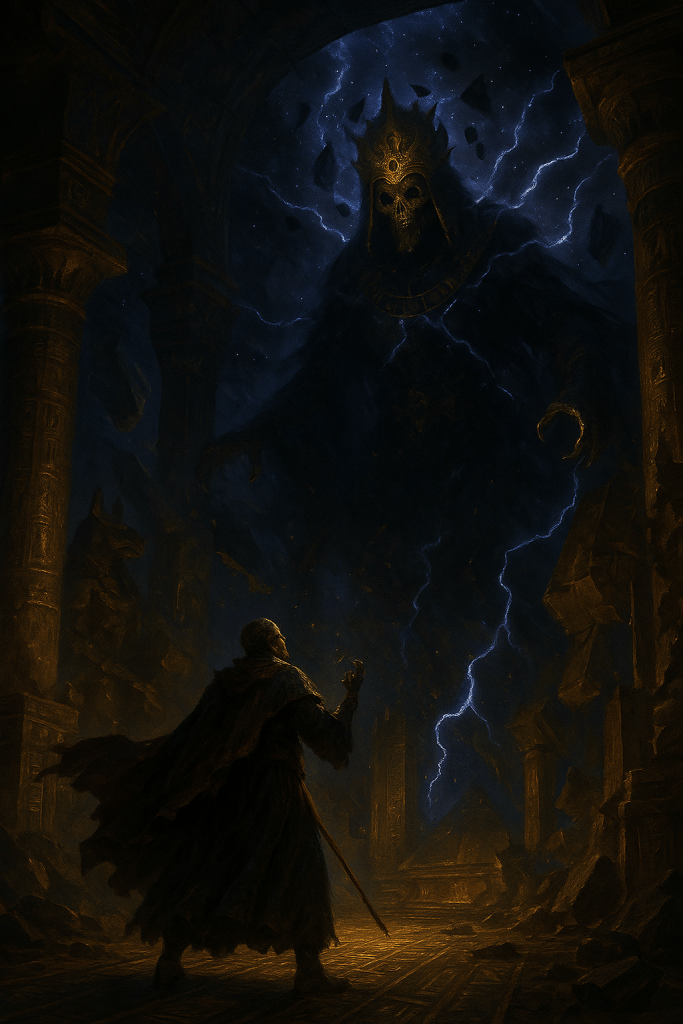
As Veyth’s skull cracked, his last words rang through the dark:
“You have blinded and maimed yourself, Vecna.
The shadow you would master shall be your doom.
In the hand of your dearest shall my will rise.
In his blow shall your crown fall.”
Whether Vecna dismissed the words as the ravings of a dying foe or feared them, no record agrees. But all sources claim that what Vecna took from the tomb — the secrets of the Negative Plane — enabled him soon after to forge his greatest work: the Sword of Kas.
Some say he designed the blade himself; others whisper that the forging was guided by unseen hands, that the curse itself shaped the steel and bound Veyth’s spirit within.
III. The Seduction of Kas
Kas was Vecna’s right hand, his champion and trusted confidant. To him the sword was given, and with it came whispers — promises of freedom, of vengeance, of a world made new.
Kas grew restless. He dreamed of striking down the Tyrant, ending the endless war, and freeing the last remnants of the Ur-Flan from necromantic bondage. Whether this was Veyth’s will, the sword’s whisper, or Kas’ own ambition is lost to the ages.
IV. The Battle of Shar-Ankuraat
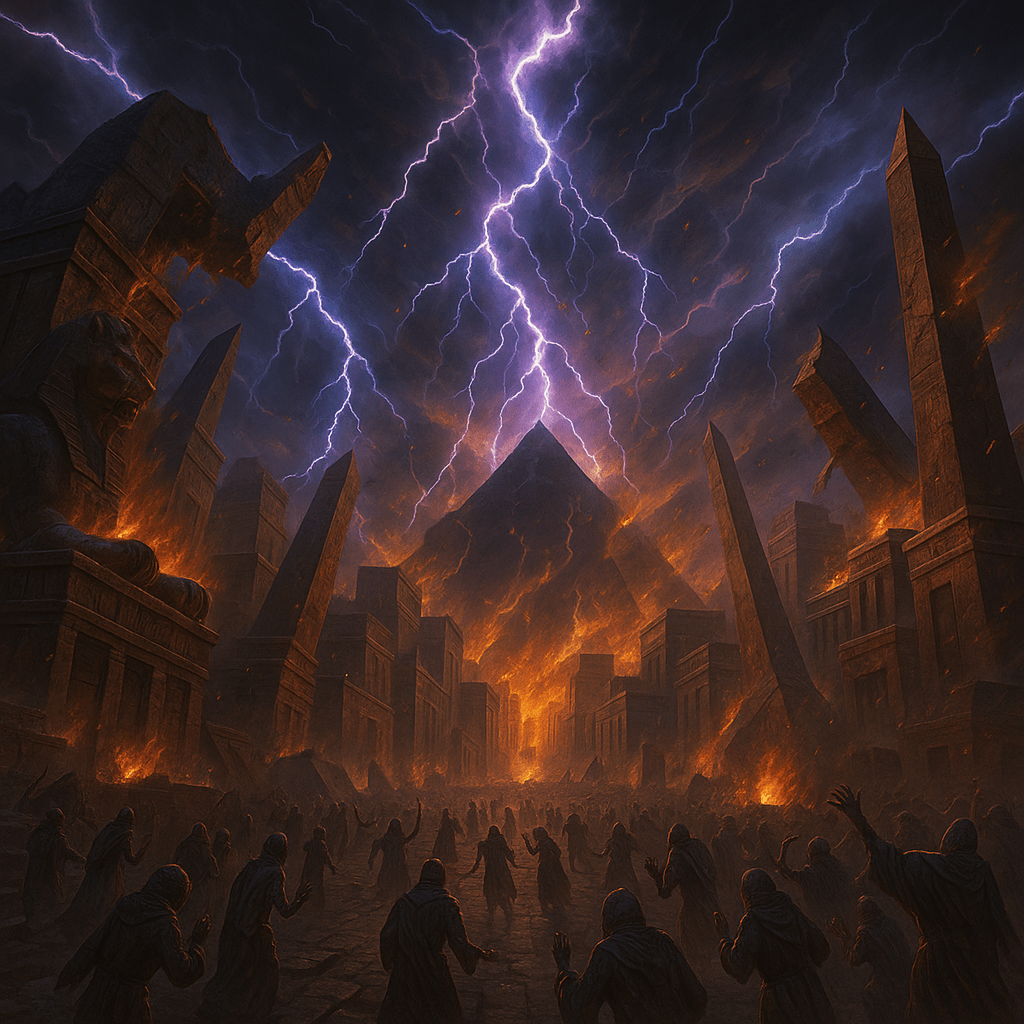
The confrontation came at last in the great city of Shar-Ankuraat, jewel of the Ur-Flan.
Kas struck first. The sword screamed like a thousand tombs opening with a bolt of lightning the world has not since seen; the wound it made in Vecna’s body poured forth black fire and shadow. The spires of Shar-Ankuraat cracked and fell at the clap of its thunderous betrayal. Such was the blow that even the earth opened to voice its protest; the blackened tiles before Netherwell, that gate to the eternal night skies, so skillfully set became furrowed as if the Plane itself had come to bear witness.
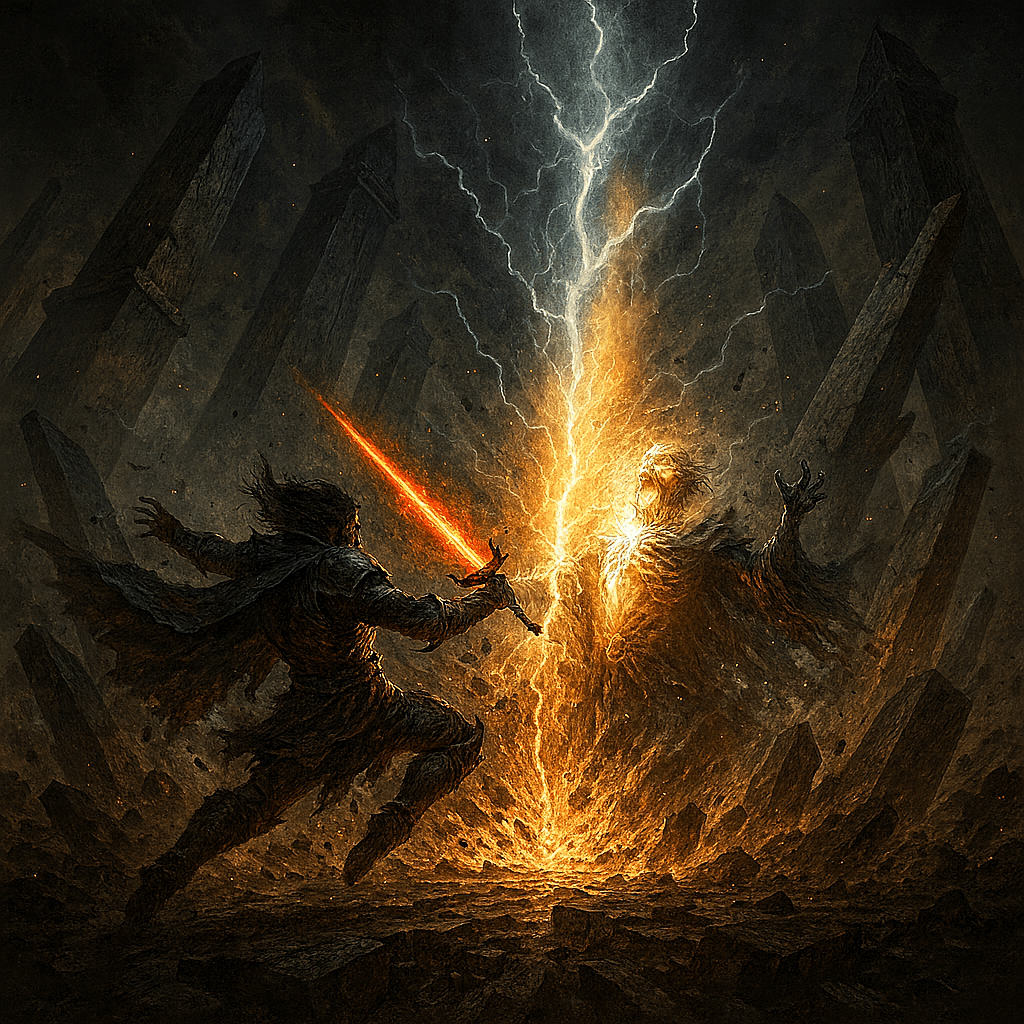
“Vecna was unmade,” writes Drelth, “save for his Eye and Hand, which burned where they lay, too hateful to be consumed.”
Yet in his last act, Vecna tore the very air with a horrific sigil of annihilation with his remaining hand. The air split, and Kas — still clutching the sword which had guided him to this moment with subtle and profane whispers — was hurled screaming into the rift. Some heard a boom of thunder like the cackle of laughter over Kas’ fate and Vecna’s fall, others say it was a voice uterring doom upon Vecna as his soul faded.
V. The Veyth Heresy
As written by Maereth of Calbut, Scholar of the Third Luminary, 489 CY (Cited by Althamar with reservations)
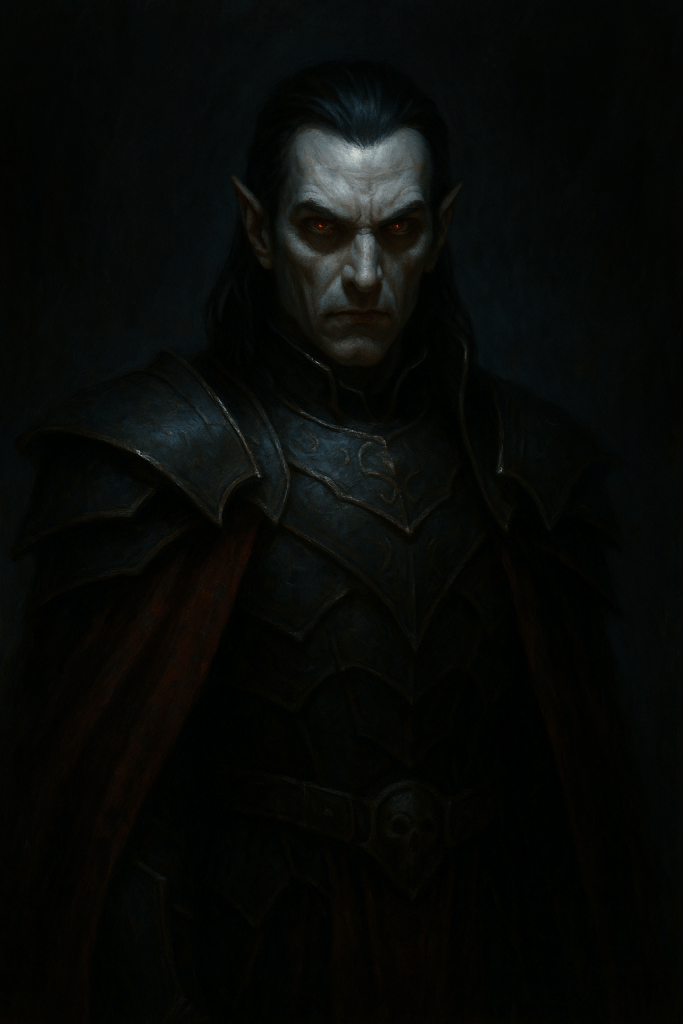
It is no secret that the tale of Kas is the most contentious portion of the Chronicle of Shar-Ankuraat, and many a learned disputation has been held upon the matter. Among the orthodox — those who uphold the Curse of Veyth as final and complete — the fate of Kas is not merely tragic but annihilating. They hold that when Vecna’s last spell hurled his betrayer into the Netherwell, the general was torn to ash by the purest essence of shadow.
‘For shadow devours all,’ they write, ‘and none but Veyth may walk it unconsumed.’ To them, the Sword itself — not Kas — was the true executioner, the curse personified. In this telling, the weapon struck Vecna down of its own will and then vanished, its geas fulfilled.
Yet there is another account, whispered even now, though many a priest and scribe call it heresy. It is said that Kas did not perish, but in that last instant called upon the Sword for aid. He pledged himself wholly to whatever whisper haunted its steel, promising fealty to the shadow itself. In answer, the Sword opened a way — not the Netherwell, but a hidden gate — and through it Kas vanished, blade in hand.
Althamar ’s Commentary
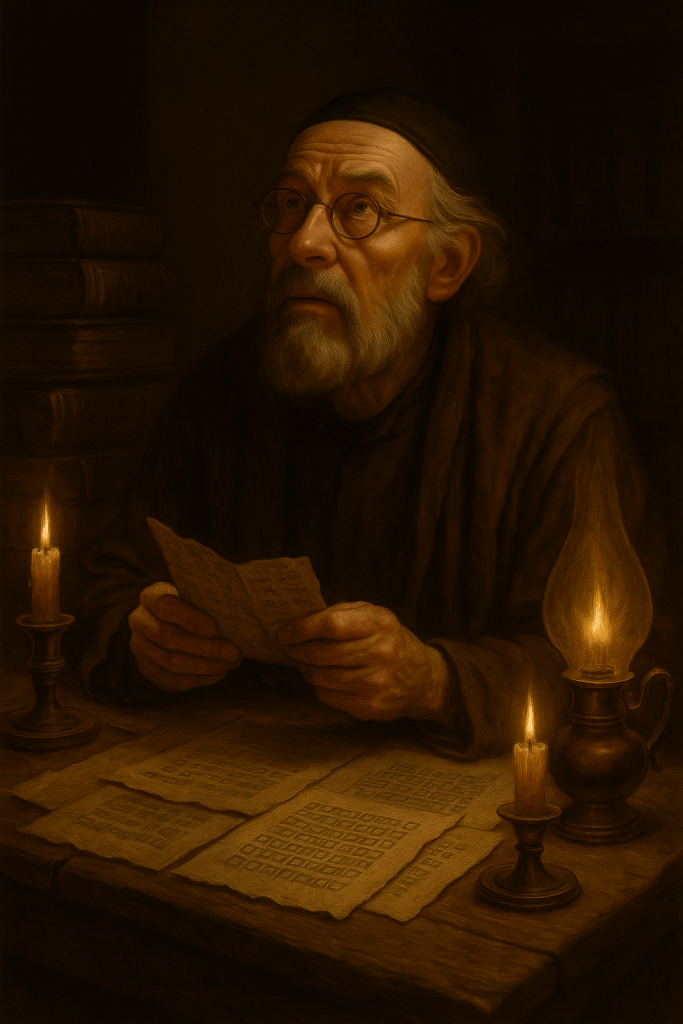
I cite Maereth’s words not as certainty, but as evidence of how fearful men can be when faced with the unknown. To declare Kas’s survival a heresy is to close one’s eyes to the possibility that Veyth’s curse was more than mere poetry. And yet, I cannot fault Maereth his caution — for to admit that Kas might return is to admit that the Age of Tyrants is not truly ended and I am left with my own unsettling thoughts on the matter: for if Vecna had taken the purported secrets of Veyth, who is to say that he too, being so close to the Netherwell, might not have had the means to escape…
VI. The End of the Ur-Flan and The Age of Ruin
Shar-Ankuraat was no more. Its towers were broken, its libraries ash, its people scattered. This battle marked the end of the Age of Tyrants and the last chapter of Ur-Flan dominion, some have referred to the period thereafter as ‘The Age of Ruin’ though I feel that is an unecessary postscript.
Over the centuries that followed, the survivors became wanderers and hermits. The story of Vecna and Kas passed into fearful legend — told around fires as a warning against hubris:
“Take not what is not freely given,
or the shadow shall take from you all you possess.”
VI. The Legacy of the Curse
The sword, they say, was eventually lost — or perhaps it left Kas, seeking new hands to complete its vengeance. Some say its whispers can still be heard where the Netherwell yawns, promising power to any who will bear its curse.
And Vecna… His empire was gone, but his dream endured. The Hand and Eye have purportedly reappeared in ages since, each time heralding a new attempt to reclaim the glory of the Ur Flan.
The implications of this second telling of the Veyth Heresy are troubling beyond measure. For if it is true, then Kas is not dead, but hidden — kept in the folds of shadow as one keeps a dagger under one’s cloak, to be drawn again should the Tyrant rise. What price he paid for such a bargain none can say, but one shudders to think it. Was he remade? Was his soul stripped and reforged in the black fires of the Plane? Perhaps annihilation would have been the greater mercy. For if Kas yet walks, then when he is called again, we may not recognize him — save by the ruin that follows.
Commentary of Althamar
In conclusion, I think Drelth was quite mad when he wrote this — yet, there is method in the madness. The parallels are too strong to be coincidence. The curse, the sword, the fall of Shar-Ankuraat — these are not merely tales. We walk still in the long shadow of that day, and if the sword yet whispers, then their story may still have chapters to be written.
 Greywolf Comics & Media