A Historical and Mythic Survey from the Age of the Great Mothers to the Present Duke
Compiled in CY 574 at the Ducal Archive of Nevond Nevnend
I. The Age of the Great Mothers (Pre-300 CY)
Before dukes, barons, or walls, the land that is now Tenh was guided by the Great Mothers — seven revered matriarchs who spoke for the Flan tribes. They were priestesses of Beory and the Old Faith, keepers of the hearth, and mediators of clan disputes. Over the decades that number would change but was never less than seven. Each season they gathered at the moot-stones to bless the land, settle quarrels, and appoint a war-chief when the tribes were threatened.
At the heart of their teaching stood the Shadow Mother, guardian of the veil between life and death. The Shadow Mother bore twin sons whose fates would shape Tenh’s soul:
Thalan, the Dark Watcher, who accepted death as part of the cycle and guided the dead back to Beory’s embrace. Vhorga, the Devourer, who claimed death as the final power and bound souls to remain in shadow forever.
When the Mothers judged them, Thalan bowed and laid down his scythe; Vhorga raised his as a sword. Beory chose Thalan, but Vhorga fled east beyond the Rift, vowing to unmake the cycle. From that day, the Mothers lit seven sacred fires at midsummer — leaving the eighth unlit to mark the Devourer’s rebellion.
Some sages say the Ur-Flan necromancers were Vhorga’s heirs, wielding his dark philosophy to build their terrible empire in the Age of Ruin, raising the dead to eternal bondage.
The Seven Great Mothers
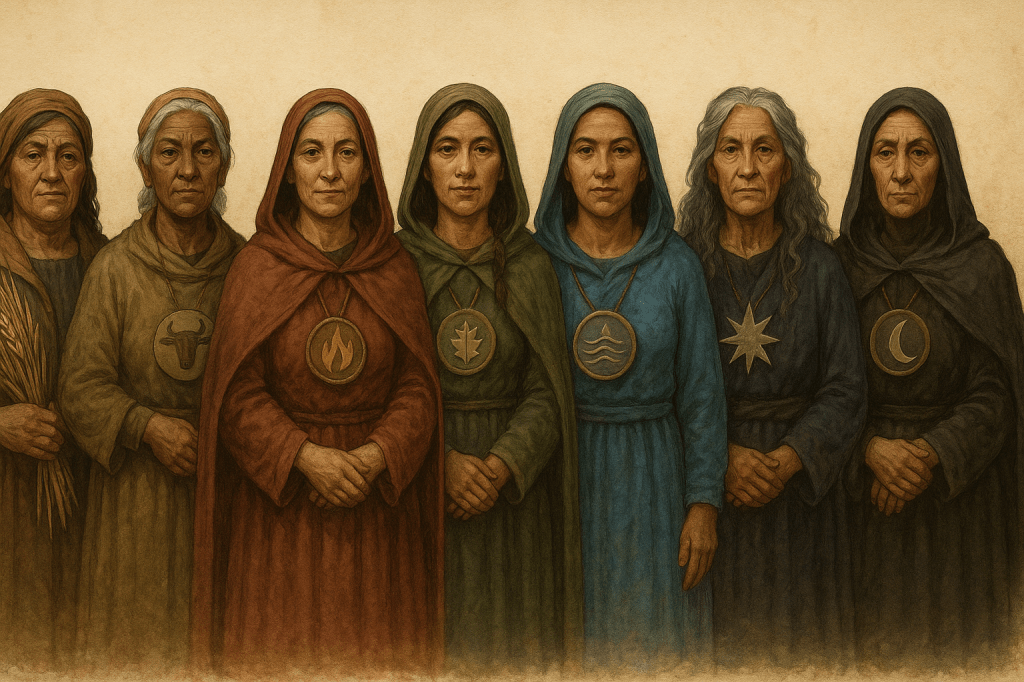
Each Mother embodied one of the seven sacred aspects of life and the land. Their legacy lives on in baronial heraldry, midsummer rites, and ducal coronations:
Mother
Aspect
Symbol
Mother of Grain
Provider, Beory’s bounty
Sheaf of wheat
Mother of Herds
Protector of beasts and wild kin
Horned cow or bison
Mother of Hearth
Keeper of kinship and peace
Hearth flame
Mother of the Grove
Guardian of wild places
Oak leaf
Mother of Waters
Purifier and guide
Rippled water
Mother of Stars
Keeper of lore and memory
Seven-pointed star
Mother of the Veil
Guardian of death and rebirth
Crescent moon
Tradition: The barons of Tenh still light seven fires during the midsummer moot, leaving the eighth unlit as a warning of Vhorga’s curse.
II. The Aerdi Encroachments (c. 300–340 CY)
As centuries passed, the tribes of Tenh grew into proto-baronies, still ruled by the descendants of the Great Mothers. But in the early 4th century CY, the Great Kingdom of Aerdy pushed northward, seeking to claim the Zumker valley and even the Rift Canyon itself.
The Mothers appointed a war-chief, Caleb of the Red Road (named for a village whose soil contained a rich red clay and produced beautiful crimson pottery) who rallied the clans into a single host. In a decisive battle near the Rift, Caleb’s cavalry crushed the Aerdi legions soaking the ground with their blood so much it resembled the soil of his home and hurled them back in defeat.
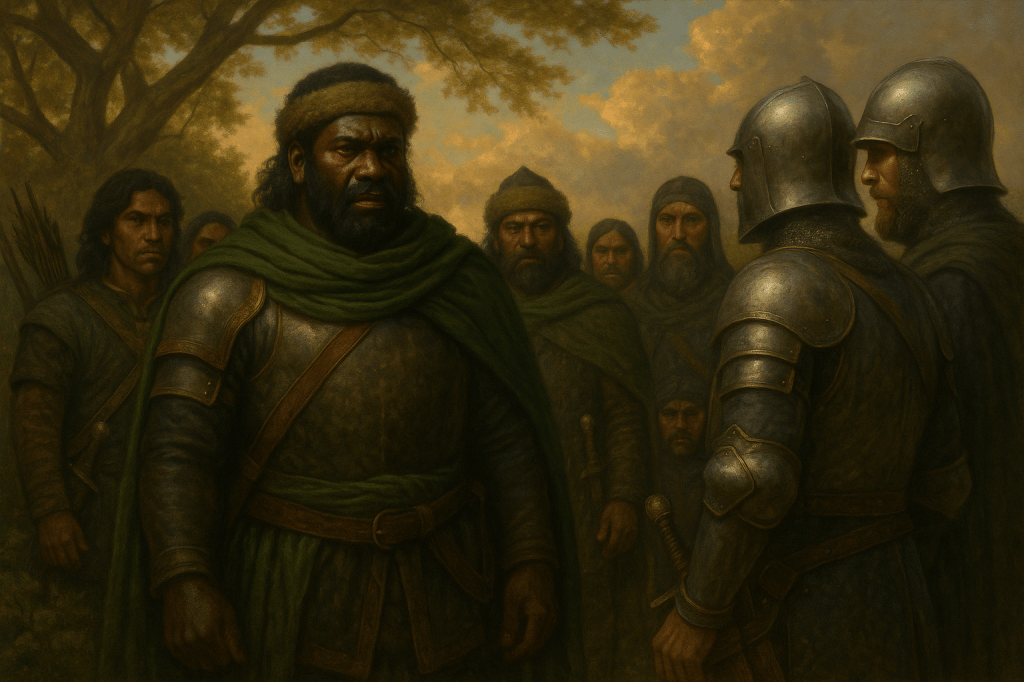
This victory became the defining moment of Tenh’s independence. A decade later, it was immortalized in the Ballad of the Red Road, sung at every midsummer moot. The song named Caleb “First of Dukes” — and with the blessing of the Mothers, Caleb took the title Duke of Tenh, founding the ducal line.
III. The Duchal Line (c. 340–578 CY)
#
Duke
Reign (CY)
Key Events
1
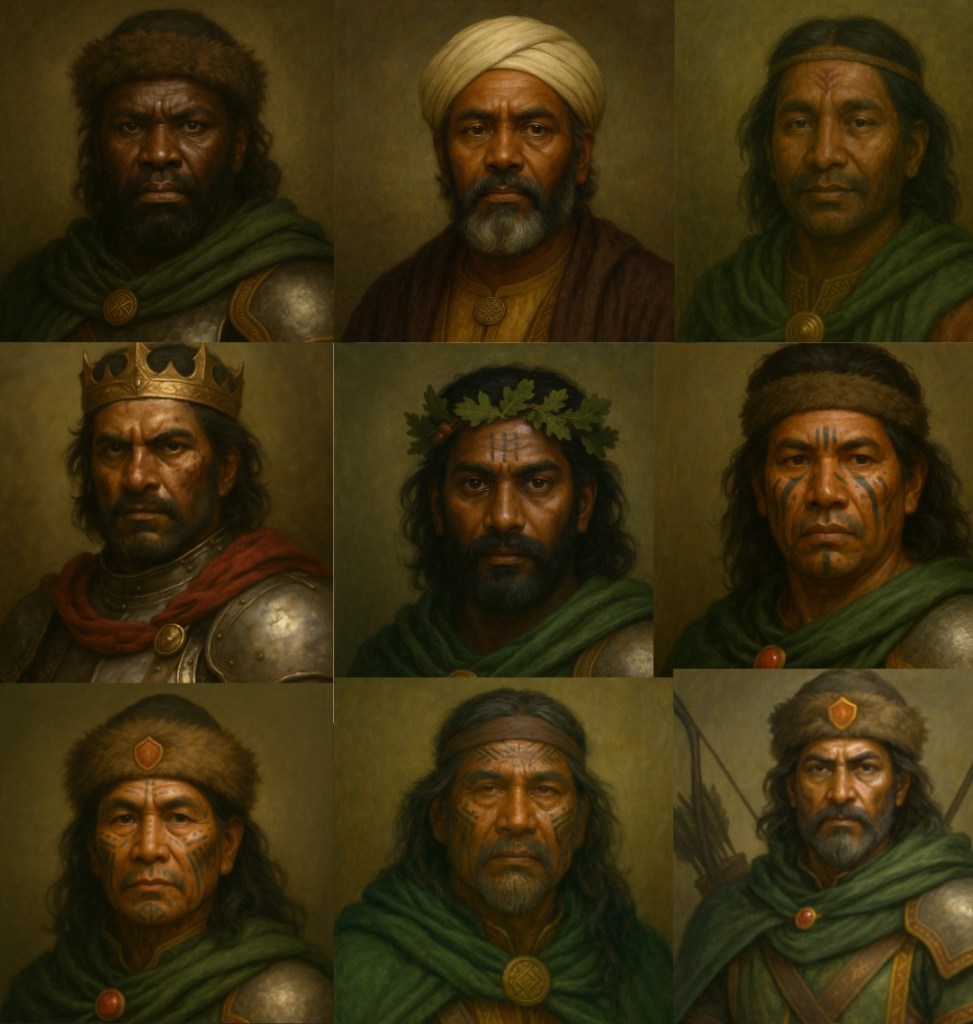
Caleb I, “the Founder”
c. 340 – 372
Unites the Seven Mothers’ tribes, routs Aerdi at the Battle of the Red Road, takes title Duke of Tenh.
2
Caleb II, “the Lawgiver”
372 – 402
Codifies clan law, builds first fortifications of Nevond.
3
Damar the Peaceful
402 – 436
Fosters trade with Urnst, oversees era of prosperity.
4
Hadran “the Ironhanded”
436 – 468
Creates formal ducal court, reorganizes baronial council, launches cavalry reforms; charters the mining of darksilver or platinum from mountains to mint Tenha currency. Quells a minor dispute of dwarves in the darksilver mine of Gnóttbrunr (“Fountainwealth mines”)
5
Mavren
468 – 500
Patron of druids and priests, renovates shrines of the Seven Mothers.
6
Harvek
500 – 532
Holds the “Long Quiet,” a peaceful but insular period; strengthens borders against raiders.
7
Ehyeh I
532 – 560
Expands Nevond–Nevnend’s walls, builds stone roads; renews ties with the Pale and Urnst.
8
Ehyeh II
560 – 572†
Reign marked by border wars; falls to wasting illness c. 572 CY, delegates power to son.
9
Ehyeh III
Acting Duke 572 – 578, crowned Needfest 578
Former Ranger Lord of Harthold’s Reach. Stabilizes eastern frontier during regency; crowned just before the Greyhawk Wars.
† Illness and Rumor: Some say Ehyeh II’s wasting sickness was sent by Iuz; others whisper it was punishment from the Old Faith for spurning a delegation of priestesses early in his reign.
IV. The Age of Hadran and the Court
No duke changed Tenh as much as Hadran Ironhanded, remembered as a reformer on par with foreign “great kings.” He forged the Ducal Court, centralized authority, and turned the baronial council from a tribal moot into a permanent governing body, which up to that point still sought approval and ratification from the council of Greatmothers.
Hadran also oversaw Tenh’s most famous supernatural crisis — the Haunted Mine Incident, in which miners unearthed an Ur-Flan shaft filled with necrotic crystals. The dead rose as ghouls until Hadran led the cavalry to cleanse the site. To this day, Tenha soldiers recite the oath: “When shadow rises, the duke must ride.”
Some whisper that the story of the Haunted Mine is an embellishment of what truly happened.
V. The Present Crisis (CY 574)
By the current year, Tenh stands at a crossroads. Ehyeh II wastes away in the ducal chambers, leaving day-to-day rule to his son Ehyeh III. Some barons question the legitimacy of the regency; others fear that war with Stonefist or Iuz may soon engulf the duchy.
At the midsummer moot, the Seven Fires are still lit, and the eighth left dark, a reminder that the struggle against Vhorga’s whisper — and the chaos beyond the Rift — is never truly over.
 Greywolf Comics & Media